Serving Bedford, TX · ZIP 76021 · 76022 · 76095
Mold Inspection in Bedford, TX: Find the Source, Not Just the Stain
A mold inspection in Bedford TX is a moisture investigation, not a walkthrough with a flashlight. We walk the whole house – not just the spot you’re worried about – take moisture readings with meters, scan walls with thermal imaging, and trace how water is getting in. You get a written report with photos, readings, and a fixed-price scope of what to do next.
Call (817) 839-0204
Mon-Sun, 8:00 AM – 7:00 PM
Bedford Local · 76021 · 76022 · 76095
Written Report in 24 Hours
What a Mold Inspection Actually Is
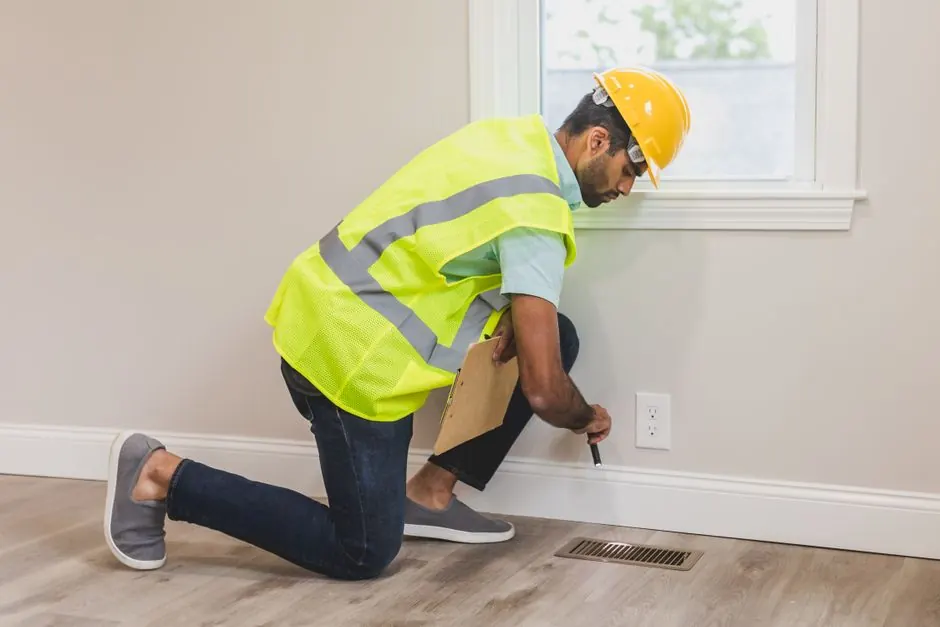
Most mold calls start with a smell, a stain, or a symptom – and a vague worry. An inspection turns that worry into a specific finding with a specific fix. The two questions every inspection must answer: where is the mold, and what moisture is feeding it? If both can be answered without a lab, the lab is a poor use of your money. If they can’t, sampling earns its keep.
Know the difference: a general home inspector is not a mold inspector. InterNACHI’s home-inspection standards explicitly exclude mold, mildew, and air quality – so “suspected microbial growth” on a home inspection report is a flag, not a diagnosis. It means hire a specialist.
And here’s the Texas rule that protects you: the company that finds the mold cannot be the company that fixes it on the same project. Texas TDLR licensing separates mold assessment from mold remediation – the assessor diagnoses, a different licensed party remediates. Anyone offering to do both on your job is selling you a conflict of interest.
What Our Inspection Covers
Every inspection covers the full moisture investigation. Remediation, duct cleaning, and reconstruction are separate scopes – quoted only if the findings call for them, so you never pay for work the report doesn’t support.
Full Moisture Survey
Meter readings at every exterior wall base, under each sink, around the water heater, and at the HVAC air handler – logged as percentages, so you can see exactly how wet each area is and compare after repairs.
Thermal Imaging Scan
A thermal camera reveals temperature differences behind finished walls, above ceilings, and around windows – showing where hidden moisture likely sits, without cutting into your home. Every anomaly gets confirmed with a meter.
Targeted Sampling
Air or surface samples only when they answer a defined question – suspected hidden growth, real-estate documentation, post-remediation verification. Never willy-nilly.
Written Report in 24 Hours
Photos, moisture data, findings, and a fixed-price scope of recommended work – in plain English. If the honest answer is “this is minor, here’s what to watch,” we’ll say that too.
What’s NOT Included
We don’t tear open walls, we don’t guarantee mold does or doesn’t exist anywhere unseen, and the inspection is a standalone product – not a funnel into a remediation quote.
Before We Arrive
Close all exterior doors and windows, and leave interior doors open. Air sampling compares your indoor air to outdoor air sampled the same day – open windows ruin the comparison.
The Inspection Process, Step by Step
The same sequence on every visit – every step exists because skipping it has burned someone before:
Leak history, repair records, odor patterns, seasonal moisture. This focuses the entire visit.
Every accessible area – odors, staining, visible growth – documented with a photo log.
Pin and pinless readings on drywall, wood, concrete, and subfloors, logged per location.
Temperature anomalies behind walls and ceilings, no demolition. Every anomaly confirmed with a meter.
Roof sheathing, insulation, exhaust vent terminations. Bath fans vented into the attic are a classic find.
Air handler cabinet, coils, drain pans, condensate lines and routing. A common hidden source in Bedford.
Foundation clearance, grading and slope, gutters, downspouts, window and door sealant.
Air or surface samples only when they answer a defined question – sent to an independent lab.
Photos, moisture data, findings, and a fixed-price scope – delivered within 24 hours.
Mold Testing Types, Explained Honestly
Four methods cover nearly every residential situation. Each answers a different question – and each has limits the lab brochure won’t lead with:
Spore Trap (Air Sample)
Spore counts by species, reported as spores/m³ – interpreted against an outdoor control taken the same day. Best for: suspected hidden growth, post-remediation verification, real-estate documentation. Typical lab cost: $75-$150 per sample.
Tape Lift / Swab
Confirms whether visible growth is actually fungal, and which genus. Best for: settling whether a suspicious stain is mold rather than dirt or soot. Typical lab cost: $75-$150 per sample.
The Honest Fine Print
Even collected perfectly, spore-trap results are “at best, semi-quantitative” (AIHA) – indoor and outdoor air vary by the hour. There are no federal limits for mold or mold spores, so no lab result can pass or fail your house.
Hardware-Store Petri Kits
Settle plates only catch spores heavy enough to fall out of the air – and every home on earth will grow something on the dish. A positive means nothing; a negative proves nothing. Save your money.
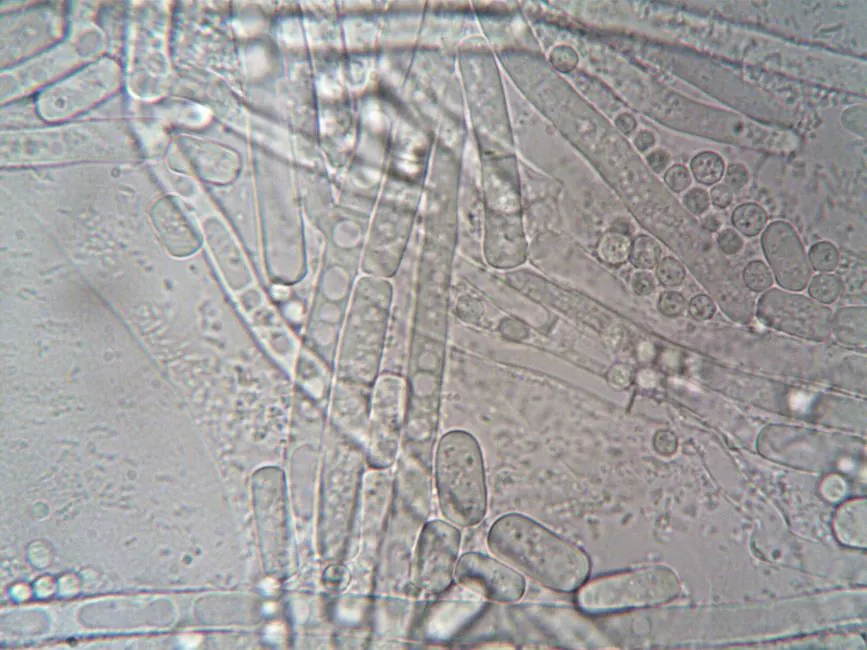
When testing is worth it: musty odor with no visible source · post-remediation verification by an independent tester · real-estate documentation · health-concern cases where species data guides decisions. When it’s a waste: visible growth with an obvious moisture source (spend the money on the fix) · routine “peace of mind” screening with no symptoms, odor, or water history · any test whose result wouldn’t change what you do next. (EPA: “In most cases, if visible mold growth is present, sampling is unnecessary.”)
Why Bedford Homes Need Inspections More Often
In Bedford, the decade a house was built predicts where an inspector looks first. The median Bedford home was built in 1983 (Census QuickFacts) – and that era has a fingerprint:
Slab + Blackland Clay
No basements here – homes sit slab-on-grade over expansive clay. Slab leaks wick water into flooring and baseboards with nothing visible on the surface. An inspector’s meter finds what eyes can’t.
Aging Roofs, Hail Country
Texas has led the nation in hail for 11 straight years (NOAA NCEI via rooftake.com). Hail-fractured shingles on a 30-40-year-old roof cause slow attic leaks that grow mold long before ceiling stains appear.
AC Running May-September
Clogged condensate drain lines are the #1 hidden mold cause in North Texas – dripping into insulation and drywall for weeks while systems run nearly nonstop. The air handler is always on our checklist.
Add 62% average humidity (67% in May) and 34-39 inches of rain a year (myperfectweather.com, timeanddate.com), and you get a city where hidden moisture is the norm, not the exception. That’s exactly what an inspection is for.
Real Bedford Scenarios
Buying a 76022 home – the seller “fixed” a roof leak two years ago
What happens: we inspect the attic decking, ceiling drywall, and insulation for residual growth and take air samples in the affected rooms – plus an outdoor control the same day.
Outcome: lab-backed evidence of whether the repair was done right or mold is still active behind the paint – ammunition for negotiation, not anxiety.
Musty smell every time the AC runs, nothing visible
What happens: air handler, drain pan, coils, and supply plenum inspected with moisture meter and boroscope; air samples in two rooms plus outside.
Outcome: you learn whether the system is spreading spores – and get a targeted plan instead of a whole-house guess.
Selling your Bedford home – get ahead of the buyer’s inspector
What happens: pre-listing inspection documents the home’s condition with photos, readings, and lab results where needed.
Outcome: you remediate on your timeline and hand buyers clean paperwork instead of a renegotiation. (Homes with mold history can lose 20-37% of resale value – The Appraisal Journal, via Angi.)
What Does a Mold Inspection Cost in Bedford?
Straight answer: these are typical market ranges, not a quote. A real inspection is a standalone product with a fixed price – never a funnel into a remediation quote. And a working rule from working mold pros: an inspection priced far under $300 isn’t bringing the tools that find hidden problems, and one that costs nothing isn’t an inspection at all – it’s a sales call.
Professional Inspection
$300 – $600
Visual assessment, moisture meters, photo log, written report. (Published McLean VA market ranges, 2026 – DFW runs similar for standard inspections.)
Comprehensive Inspection
$350 – $700
Adds thermal imaging, HVAC evaluation, attic detail, priority report. (Published market ranges, 2026.)
Lab Analysis
$75 – $150 per sample
Added per air or surface sample, on top of the inspection. Full assessments with photos, drawings, and a remediation protocol run higher – around $1,000-$1,500 in DFW. (Green Scene Home Inspections, DFW, 2026.)
What moves a quote: square footage, attic/HVAC detail level, number of lab samples, and report turnaround. You get the price before we start.
DIY or Call a Pro?
Skip the Kit
Hardware-store petri kits catch whatever settles out of the air – every home grows something. They can’t identify species, levels, or moisture sources. A positive means nothing; a negative proves nothing.
Call a Professional
Musty odor with no visible source · buying or selling with water history · health concerns where species data matters · post-remediation verification · anything behind walls or in the HVAC.
The #1 Inspection Mistake
Testing without a plan. The EPA says to develop a “confirmable theory” first – decide what you think is happening and what result would prove or disprove it – before anyone opens a sample cassette.
Texas Law Protects You
The company that profits from the fix should not be the one grading the problem. That’s not just our opinion – it’s Texas law:
Common Questions
How much does a mold inspection cost in Texas?
Is it worth doing a mold inspection?
How long does a mold inspection take?
What to do before a mold inspection?
Can I test for mold in my house myself?
Will insurance pay for a mold test?
Stop Guessing. Get It Inspected Right.
Smell something musty, see a stain, or buying a home with water history? Just call (817) 839-0204. We’ll check availability and respond promptly: same-day when possible, next day at the latest.
What happens when you call: we ask what you’re seeing or smelling and any water history · we explain what the visit includes and the fixed price before we come · we connect you with an available licensed specialist.
Serving Bedford, TX · ZIP 76021 · 76022 · 76095 · Mon-Sun 8AM-7PM