Serving Bedford, TX · ZIP 76021 · 76022 · 76095
HVAC & Air Duct Mold Cleaning in Bedford, TX
Air Duct Mold Cleaning Bedford TX is not a routine duct-dusting visit. When mold is growing inside the air handler, on the coil, or in the duct runs, the system delivers spores to every room every time it runs. We inspect the system with a boroscope, clean the coil and drain pan, HEPA-clean the ductwork under containment, and verify the result with before-and-after air samples.
Call (817) 839-0204
Mon-Sun, 8:00 AM – 7:00 PM
Bedford Local · 76021 · 76022 · 76095
Before-and-After Documentation
What Air Duct Mold Cleaning Actually Means
There are two different services hiding behind the words “duct cleaning,” and they are not interchangeable. Routine duct cleaning removes dust and debris from the system; the industry benchmark is NADCA’s ACR Standard for assessment, cleaning and restoration of HVAC systems. Duct cleaning with mold is a remediation job: contained removal of growth from the air handler, coil, drain pan, supply plenum and duct surfaces, with antimicrobial treatment and verification. The second one is what Texas TDLR rules apply to, and it costs accordingly.
The key distinction: a routine duct cleaning company is not a mold remediation company, and a mold problem does not get solved by a cheaper duct-dusting visit. If a crew finds mold mid-visit and offers to “take care of it” on the spot, that is the exact conflict of interest Texas law bans on jobs over 25 square feet: the company that finds the mold cannot profit from fixing it on the same project. (TDLR.)
Be skeptical of fear-based upsells in this category. The EPA has not established that duct cleaning prevents health problems (EPA), and reputable pros recommend duct cleaning as needed, not on a schedule. Air duct mold cleaning Bedford TX is worth it when there is visible growth, a musty smell every time the AC runs, or excessive debris and vermin, not as a yearly ritual.
What Our HVAC Mold Cleaning Covers
Every mold job covers the full system scope below. Mechanical HVAC repair (refrigerant, motors, electrical) is a separate trade, quoted separately, so the mold work and the equipment work never blur together:
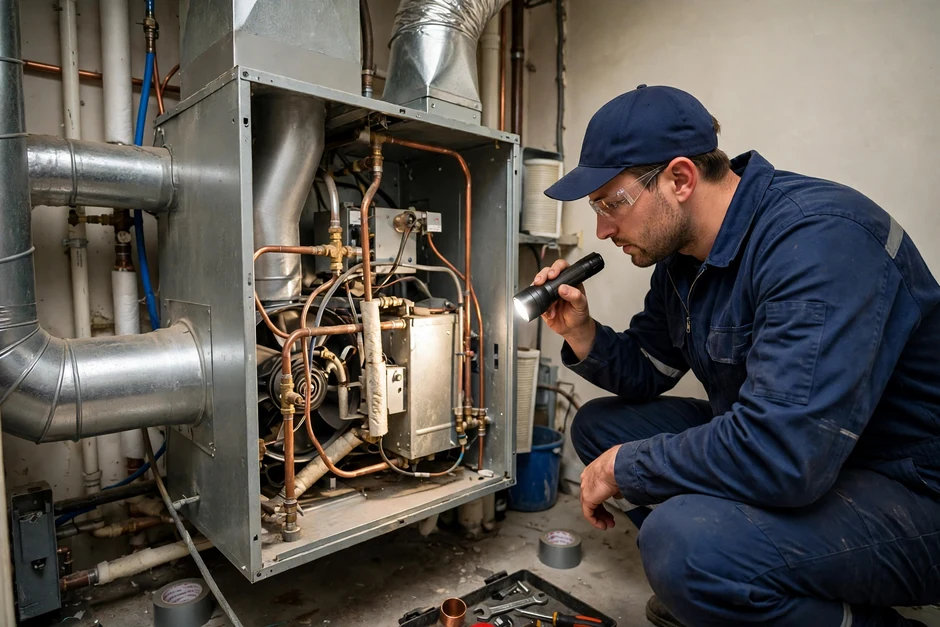
Boroscope System Inspection
Camera inspection of the air handler cabinet, evaporator coil, supply plenum and accessible duct runs, plus moisture readings at the coil and drain pan. You see what we see before any quote.
Containment + Negative Air
All supply and return registers sealed with sheeting; a negative-air machine with HEPA filtration at the air handler keeps spores out of your living space for the whole job.
Coil + Drain Pan Cleaning
The wet heart of the system: coil fins brushed and HEPA-vacuumed, drain pan scrubbed, and the condensate drain line cleared. A clogged drain is the #1 hidden mold cause in North Texas.
Duct HEPA Cleaning + Treatment
All accessible duct surfaces mechanically agitated and HEPA-vacuumed to NADCA’s ACR cleaning standard, then treated with an EPA-registered antimicrobial. Joints and leaks sealed with duct sealant; new filters installed.
What’s NOT Included
We don’t charge refrigerant, replace motors or rewire equipment, we don’t start until a licensed assessor’s written protocol exists where Texas law requires it, and we don’t sell fogging as a substitute for physical removal.
Before We Arrive
Leave the thermostat as-is so the system state is natural, and clear access to the air handler, the attic hatch and every floor register. Note when the smell started and whether it fades when the AC is off.

The HVAC Mold Process, Step by Step
Same sequence on every system, residential or light commercial:
Smell pattern, when it started, whether it fades with the AC off, recent leaks or drain work. This tells us where to look first.
A licensed assessor, independent from the remediation crew as Texas requires, documents growth, the moisture source and a written protocol.
Camera into the plenum, coil cabinet and duct runs; moisture readings at the coil and drain pan. Growth confirmed, not assumed.
Fixed-price scope with photos before work starts. If hidden mold shows up behind walls, work stops and the addition is quoted first.
System shut down, registers sealed, negative air running at the air handler. The rest of the house stays usable.
Coil, drain pan and blower cleaned; duct surfaces agitated and HEPA-vacuumed; contaminated insulation bagged and hauled.
EPA-registered antimicrobial applied, duct joints and leaks sealed with mastic, condensate drain cleared, new filters installed.
The system runs and before-and-after air samples confirm spore counts dropped. You get the written report and your CMDR.
Duct Cleaning vs. Duct Mold Cleaning: The Honest Table
These two services share a name and almost nothing else. Knowing which one you actually need saves you from buying the wrong one:
Routine Duct Cleaning
Removes dust, debris and pet dander from the ductwork to NADCA’s ACR cleaning standard. Worth it when ducts are visibly dusty, after renovation, or with vermin evidence (EPA). It is maintenance, not remediation, and it is priced like maintenance.
Duct Cleaning With Mold
Contained remediation of growth on the coil, pan, plenum and duct surfaces: negative air, physical removal, antimicrobial treatment, duct sealing and before-and-after verification. Falls under Texas TDLR mold rules when growth exceeds 25 contiguous square feet. Priced like remediation because it is remediation.
Standards: duct cleaning work is performed to NADCA’s ACR Standard, the industry’s published benchmark for HVAC assessment and cleaning. We mention NADCA as the standard, not as a credential we claim. For mold in the system, work additionally follows the IICRC S520 remediation standard, and Texas law separates assessment from remediation (TDLR). Watch for the red flags: a $600 “bleach spray in the AC box” upsell during a routine visit is not remediation, it is a sales tactic, and fogging alone never replaces physical removal.
Why Bedford HVAC Systems Grow Mold
Bedford air handlers live a hard life. The city averages 62% relative humidity (67% in May) (myperfectweather.com, timeanddate.com climate data), systems run nearly nonstop from May through September, and the median home was built in 1983 (Census QuickFacts), often with original flex duct and undersized returns. Wet coil plus warm dark ductwork plus no drying cycle equals growth.
Clogged Condensate Drains
The #1 hidden mold cause in North Texas: a clogged drain line overflows into the air handler cabinet, the insulation and the ceiling below, dripping for weeks unnoticed while the system runs nonstop.
Sweating Ductwork
Cold supply ducts run through 130-degree attics with torn or missing insulation. Condensation forms on the duct exterior and inside the plenum, and mold colonizes the wet insulation within days (EPA: mold starts within 24-48 hours of water exposure).
Leaky Returns Pulling Attic Air
Disconnected or unsealed return ducts in 1980s-era homes suck hot, humid attic air straight into the system. Every cooling cycle drags moisture across the coil, so the system never fully dries between runs.
Real Bedford Scenarios
Musty smell every time the AC kicks on
What happens: boroscope inspection of the coil cabinet, drain pan and supply plenum finds growth on the wet side of the coil; system cleaned under containment, drain line cleared, antimicrobial applied, duct joints sealed.
Outcome: the smell stops and the system stops dosing every room with spores. Before-and-after air samples document the difference.
AC condensation line leaking into the attic
What happens: overflow traced to a clogged drain line; wet insulation and ceiling drywall assessed; air handler cabinet and plenum cleaned; the drain cleared and the moisture source eliminated.
Outcome: the hidden drip is gone and the system dries properly between cycles, which is what keeps it gone.
Allergies terrible all summer, fine on vacation
What happens: symptom pattern points to the system; inspection finds growth in the plenum and a filter that has not been changed in a year; full cleaning, new filters, drain cleared.
Outcome: the system is no longer a source, and you get a simple filter-and-drain maintenance routine so it stays that way.
What Does HVAC Mold Cleaning Cost in Bedford?
Straight answer: these are typical DFW market ranges, not a quote. The biggest price driver is whether the job is cleaning or remediation, so get the written scope that says which one you are buying.
HVAC Mold Remediation
$1,900 – $6,500
Dallas market range for mold work in the HVAC system: containment, coil and duct cleaning, treatment and verification. (Angi Dallas cost guide, Oct 2025)
Routine Duct Cleaning (No Mold)
Standard whole-house duct cleaning without mold remediation costs meaningfully less and is a different service with a different standard. No reliable published DFW range is broken out for this tier, so get it itemized separately and do not let a cleaning quote get priced like a remediation job.
Contaminated Flex-Duct Replacement
Heavily colonized flex duct often must be replaced, not cleaned, priced per run by the linear foot. No published DFW market range is broken out for this add-on, so insist on a per-run line item on your quote.
What moves a quote: system size and number of zones, how much ductwork is contaminated, whether flex duct must be replaced, accessibility of the air handler, and whether before-and-after air sampling is included. Scam check: a routine-visit upsell of a “bleach spray in the AC box” for a few hundred dollars is not mold remediation, it is a sales tactic, and bleach on coil and duct surfaces does not remove growth.
DIY or Call a Pro?
Reasonable DIY
Change the filter every 1-3 months, pour a cup of white vinegar down the condensate drain line quarterly to keep it clear, and keep the area around the air handler dry. That is real prevention.
Call a Professional
Visible growth on the coil, pan or plenum · musty smell every time the system runs · water in or under the air handler · growth keeps returning after filter changes · anyone home has asthma or allergies.
The #1 DIY Mistake
Paying for fogging or “deodorizing” instead of cleaning. Mist in the ducts does not remove a colony from the coil, and a system that smells better for a week while the growth stays put is money spent on perfume.
On DIY duct “treatments”: UV lights and duct-spray decontamination are prevention add-ons, not cleanup. Contaminated porous material must be physically removed under containment with HEPA filtration, which is a job for a licensed remediator, not a spray bottle.
Texas Law Protects You
Mold inside the HVAC system gets the same legal protections as mold anywhere else, and the separation rule matters here more than most places:
Because the system moves air through the whole house, HVAC mold jobs are the ones where the separation rule protects you most. Verify any contractor’s license on the TDLR website before hiring.
Common Questions
How much does air duct mold cleaning cost in Bedford TX?
A duct cleaner offered to spray a bleach mixture in my AC box for $600. Is that a scam?
Will duct cleaning help my allergies?
How often should air ducts be cleaned?
Can mold come back after HVAC mold cleaning?
Does homeowners insurance cover mold in the HVAC system?
Smell It Every Time the AC Runs? Get the System Checked.
Musty vents, water under the air handler, or growth on the coil? Just call (817) 839-0204. We’ll check availability and respond promptly: same-day when possible, next day at the latest.
What happens when you call: we ask about the smell pattern and the age of your system · we explain the boroscope inspection and the fixed price before we come · we connect you with an available licensed specialist.
Serving Bedford, TX · ZIP 76021 · 76022 · 76095 · Mon-Sun 8AM-7PM