Serving Bedford, TX · ZIP 76021 · 76022 · 76095
Commercial Mold Removal in Bedford, TX
Commercial mold removal in Bedford TX is built around one constraint residential work never faces: your business has to keep running. We zone the work with containment so occupied areas stay open, schedule noisy demolition after hours where possible, and leave you a documentation package your insurer, owner, or property manager can actually use.
Call (817) 839-0204
Mon–Sun, 8:00 AM – 7:00 PM
Bedford Local · 76021 · 76022 · 76095
Minimal Business Disruption
What Commercial Mold Removal Actually Means
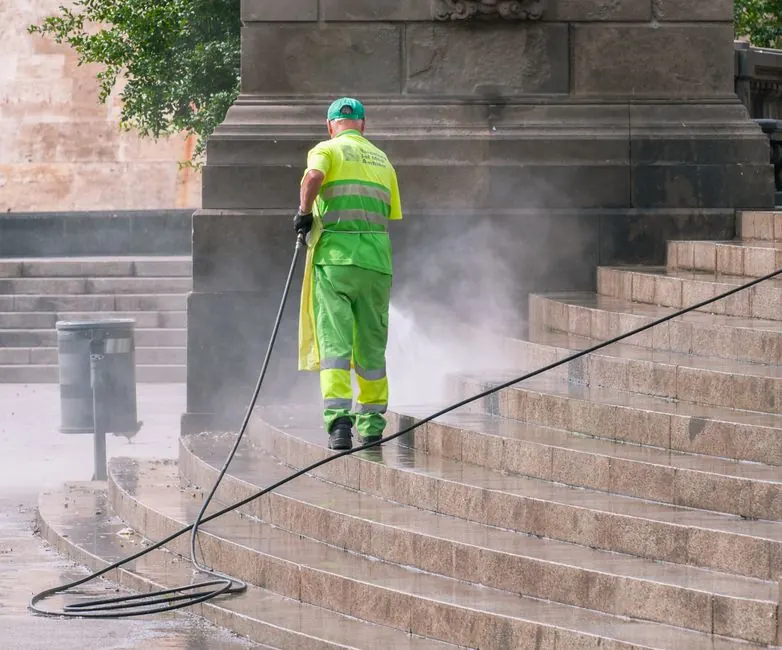
A commercial job is the same remediation science – find the moisture, contain the area, remove what cannot be saved, dry the structure, verify independently – run under commercial constraints: occupied spaces, tenants, customers, health-code exposure, and a paper trail that has to satisfy people who were not in the room. Most Bedford commercial calls start the same way: a musty odor in a back office, a stained ceiling tile above a break room, or a tenant complaint about growth near a window unit.
Know the difference: commercial remediation is not “residential work at a bigger price.” The differences are zoning (multiple sealed work zones instead of one), scheduling (after-hours and weekend options around your operations), and documentation depth (drying logs, completion reports, and clearance lab results packaged for insurers and owners – not just a verbal “we got it”).
Texas law applies the same way to commercial buildings: mold assessment and mold remediation are separate licenses, and the same company cannot do both on one project. For property managers, that means your regular contractor can handle general repairs – but the mold assessment and the mold remediation must go to separate licensed parties.
What Our Commercial Service Covers
Every commercial job starts with an on-site walk and a written scope. The items below are standard. HVAC duct cleaning, drywall rebuild, and contents cleaning are quoted separately, so you only pay for what your building needs:
Zoned Containment + Negative Air
Multiple sealed work zones with negative-air machines running, so occupied suites, showrooms, and customer areas stay open while the affected area is under containment.
Moisture Mapping + Written Scope
Moisture meter, thermal camera, and boroscope survey of the affected area and adjacent spaces. You get photos, affected square footage, and a written scope with a day-by-day schedule before work starts.
Removal + Surface Treatment
Moldy drywall, ceiling tile, and insulation cut out inside containment; HEPA vacuuming of cavities; EPA-registered antimicrobial treatment on framing and surfaces that stay.
Drying With Logged Readings
Dehumidifiers and air movers run until framing hits dry standard, with readings logged through the job. That dry-down record goes straight into your insurance documentation.
What’s NOT Included
We do not fix the roof, plumbing, or rooftop HVAC unit that caused the water – we document it for your roofer, plumber, or HVAC contractor. Rebuild work (drywall, paint, flooring) and contents cleaning are separate scopes, quoted on their own.
What to Prepare
Clear access to the affected area and the electrical panel. Tell tenants the work dates in advance. If the HVAC serves the affected zone, have your HVAC contractor’s contact ready – the system gets shut down in the work zone during containment.
The Commercial Process, Step by Step
The same sequence on every commercial job, so you always know what happens next:
We ask about the building type, the affected area, your operating hours, and who else needs the paperwork – owner, insurer, property manager.
Affected square footage measured, schedule options laid out including after-hours and weekend windows, price in writing before anything starts.
A licensed assessor – independent from the remediation crew, as Texas law requires – produces the written protocol: rooms, quantities, methods.
Work zones sealed, negative air running, vents closed and HVAC shut down in the zone. Occupied areas stay usable.
Porous materials out inside containment; HEPA vacuuming; EPA-registered antimicrobials on everything that stays.
Equipment runs to dry standard with readings logged through the job – your documented dry-down record for the insurer.
A separate licensed assessor verifies the work passed and lab samples go to an independent lab. You get the results in writing.
Completion report, photos, readings, lab results, and the CMDR – plus moisture-prevention recommendations so you do not buy the same job twice.
Commercial vs. Residential Remediation: What Actually Changes
The mold science is identical. Everything around it scales up:
| Residential | Commercial | |
|---|---|---|
| Containment | One work zone sealed off | Multiple zoned work areas; occupied suites and customer areas stay open |
| Scheduling | Daytime visits | Daytime plus after-hours and weekend windows around your operations |
| Documentation | Photos, readings, CMDR | Photos, readings, CMDR, plus drying logs, completion report, and clearance lab results packaged for insurer and owner |
| Stakeholders | The homeowner | Tenants, property manager, owner, insurer – and the schedule has to work for all of them |
| Common moisture sources | Supply lines, water heaters, AC condensate, roof leaks | Flat-roof ponding and blocked drains, rooftop HVAC condensate, slab joints, irrigation overspray |
Staying open during the work
Full closure is rare. It comes up when the affected area covers most of the usable floor space, when the HVAC system serves every room, or in food, healthcare, or childcare settings where local health requirements apply. In most cases the plan is: seal the work zone, run negative air, do the noisy demolition after hours or on weekends, and keep your doors open. The containment plan – not optimism – should decide.
Why Bedford Commercial Buildings Grow Mold
Bedford averages 62% relative humidity (67% in May) with 34-39 inches of rain a year (myperfectweather.com, timeanddate.com climate data), and commercial buildings add their own risk factors on top of the climate. Mold starts within 24-48 hours of water exposure (EPA) – and in a commercial building, the water often sits unnoticed over a weekend or in an unoccupied suite:
Flat Roofs + Blocked Drains
Low-slope commercial roofs pond water when drains clog with leaves and debris. Texas has led the nation in hail for 11 straight years, and Fort Worth logged 41 hail days in 2024 (NOAA NCEI via rooftake.com) – hail-fractured membranes leak slowly into ceiling plenums above drop tiles.
Rooftop HVAC Condensate
Package units on commercial roofs produce gallons of condensate a day in a Bedford summer. Clogged condensate lines are the #1 hidden mold cause in North Texas, and on a roof nobody checks the drain pan until the ceiling tile stains.
Slab Joints + 1983-Era Buildings
Bedford commercial stock is largely 1970s-1990s construction on slab-on-grade over expansive Blackland clay – effectively no basements, so water enters at slab joints, storefront thresholds, and irrigation overspray instead. Older plumbing and aging roof membranes complete the picture.
Peak risk seasons: May through early summer (peak humidity, peak hail, hardest-working HVAC) and winter freeze events that burst pipes in unheated commercial spaces.
Real Bedford Commercial Scenarios
Restaurant stockroom smells musty; a health inspection is coming
What happens: after-hours visit so the dining room never sees a crew. Moisture meter and boroscope trace the source (a slow condensate leak behind the drywall); the affected section is contained, cut out, treated, and dried; clearance air samples go to an independent lab.
Outcome: the restaurant never closes, the stockroom is back in service on schedule, and the clearance lab report goes into the records for the inspection.
Duplex tenant reports a musty hallway; owner suspects the AC
What happens: air handler, drain pan, and condensate line inspected with moisture meter and boroscope – the classic North Texas hidden leak. Affected drywall removed inside containment, framing treated, condensate line cleared and rerouted.
Outcome: the source is documented (not guessed at), the tenant gets a written clearance summary, and the owner holds photos and readings that settle who pays for what.
Office suite ceiling tiles stained from a roof leak; neighboring tenants stay open
What happens: the suite is zoned off with containment while adjacent suites operate normally; moldy tiles and insulation above the grid come out; the roof leak is documented for the building owner’s roofer; noisy demolition runs after hours.
Outcome: neighboring businesses are never disrupted, and the property manager gets a completion report with clearance results for the insurer and the owner. (Homes and buildings with mold history can lose 20-37% of resale value – The Appraisal Journal, via Angi.)
What Does Commercial Mold Removal Cost in Bedford?
Straight answer: these are typical market ranges, not a quote. Commercial mold removal in Bedford TX prices on the affected area, not your building’s total size – a 20,000 sq ft warehouse with mold in one 300 sq ft office is priced on that office plus containment and testing. The baseline rate is $10-$25 per square foot of affected area (Angi, HomeAdvisor, and This Old House).
Single Suite / Small Zone
$1,000 – $2,500
Around 100 sq ft affected – a contained office, stockroom corner, or single rental unit. ($10-$25/sq ft baseline: Angi, HomeAdvisor, This Old House.)
Multi-Suite Zone
$5,000 – $12,500
Around 500 sq ft affected – a large office zone, retail back-of-house, or joined suites. ($10-$25/sq ft baseline: Angi, HomeAdvisor, This Old House.)
HVAC / Large Project
$3,000 – $10,000
When growth reaches the air handler or ductwork. Projects over 1,000 sq ft run $15,000-$30,000. (Commercial restoration cost guide; HomeGuide.)
What moves a quote: affected square footage (not building size), HVAC involvement, after-hours labor, whether clearance testing is included (often $150-$500 separately (BUK Restoration, 2025)), and rebuild scope. Get three itemized scopes in writing – and make each bidder state the affected square footage they measured, or the quotes cannot be compared.
DIY or Call a Pro?
Reasonable In-House
A small, clearly defined patch on a hard, non-porous surface (tile, glass, metal) – N95 mask, gloves, detergent. Maintenance staff handle this in most buildings without a contractor.
Call a Professional
Growth in drywall, wood, ceiling tile, or insulation · in the HVAC system or ductwork · keeps coming back after cleaning · after flooding or sewage · multiple suites affected · tenants reporting health symptoms.
The #1 Commercial Mistake
Painting over it and telling the tenant it is handled. Encapsulant over active growth with the moisture source still running guarantees a bigger, more expensive job – and in Texas, a tenant with documented complaints and a paper trail is a liability problem, not just a maintenance one.
Texas Law Protects You – Including Commercial Buildings
The same mold licensing laws cover commercial projects, and property managers should know the separation rule cold:
Two more things worth knowing: your insurer is prohibited from requiring you to use a specific contractor (TX OAG), and there is no official “Stage 4” in Texas mold regulations – what the law cares about is square footage, location, and licensed handling. Verify any contractor’s license on the TDLR website before hiring.
Common Questions
How much does commercial mold removal cost in Bedford TX?
Do we have to close the business during remediation?
How long does commercial mold remediation take?
My tenant reported mold – who pays for remediation?
Can the same company assess and remediate our building in Texas?
What paperwork do we get for insurance and liability?
Keep Your Business Open. Get the Mold Handled Right.
Got a mold problem in your building – urgent or not? Just call (817) 839-0204. We’ll check availability and respond promptly: same-day when possible, next day at the latest.
What happens when you call: we ask about your building, the affected area, and your operating hours · we confirm the scope and scheduling options, including after-hours · we connect you with an available licensed specialist.
Serving Bedford, TX · ZIP 76021 · 76022 · 76095 · Mon–Sun 8AM–7PM